
Bothell City Directory Holdings
Bothell's directory shelf is regional and fragmented. KCLS points to a Polk Seattle North Suburban reverse-address directory from the early 1970s, held for in-library use at Bellevue, but researchers should ask staff to confirm the exact volume and year. The State Library catalog also helps identify county and regional directory titles, although its public access changed in 2025. Newspaper, map, and museum collections fill years where a conventional Bothell-only run has not been verified.
| Collection | Years | Where held | Access |
|---|---|---|---|
| Polk Seattle North Suburban reverse directory | Early 1970s lead, exact year to confirm | KCLS Bellevue | In-library inquiry |
| Bothell Sentinel and Citizen archive | 1908 to 1960 | KCLS, Bothell Historical Museum, Woodinville Historical Society | Online archive and local access |
| Downtown Bothell Sanborn sheets | 1912, 1926, 1932 | KCLS Digital Sanborn Maps | Library database |
| Bothell family and business papers | 1872 to 1921 core deed collection | Bothell Historical Museum Society | Contact museum |
| Census and genealogy databases | Record-set dependent | KCLS and Washington State Library | Library card, appointment, or archive |
Do not convert a catalog gap into a claim that no directory existed. Record the exact title, publisher, year, library, call number, and page seen. A regional title may cover Bothell, North Creek, Woodinville, Kenmore, or other north suburban communities.
Find Bothell in Regional Directories
A useful Bothell city directory may be cataloged under Seattle North Suburban or Polk North Suburban. Search title variants before searching only for “Bothell.” The street-order section can reveal an address even when the alphabetical section uses initials, a spelling variant, or a household head's name.
The early-1970s KCLS lead is an insider tip, not a proven annual run. Contact KCLS Bothell or Bellevue staff with the target street and approximate year. Ask whether the volume has both alphabetical and reverse sections, whether scans are allowed, and whether nearby years exist at another branch.
The Bothell branch has a microfilm and microfiche reader, scanner, public computers, and local staff. Its listed hours are Monday 10 to 6, Tuesday through Thursday noon to 8, Friday 10 to 6, and weekends 11 to 6. Confirm hours before traveling.
Bothell Citizen Directory Evidence
The Bothell Sentinel and Citizen archive spans 1908 through 1960. The holding is split across local institutions, with Bothell Historical Museum and Woodinville Historical Society preserving different periods. Newspapers are not city directories, but they can confirm a name, business, club, school, address, death notice, or move that a sparse printed entry leaves unexplained.
Open the KCLS Bothell local-history list shown in this capture to see the library context.
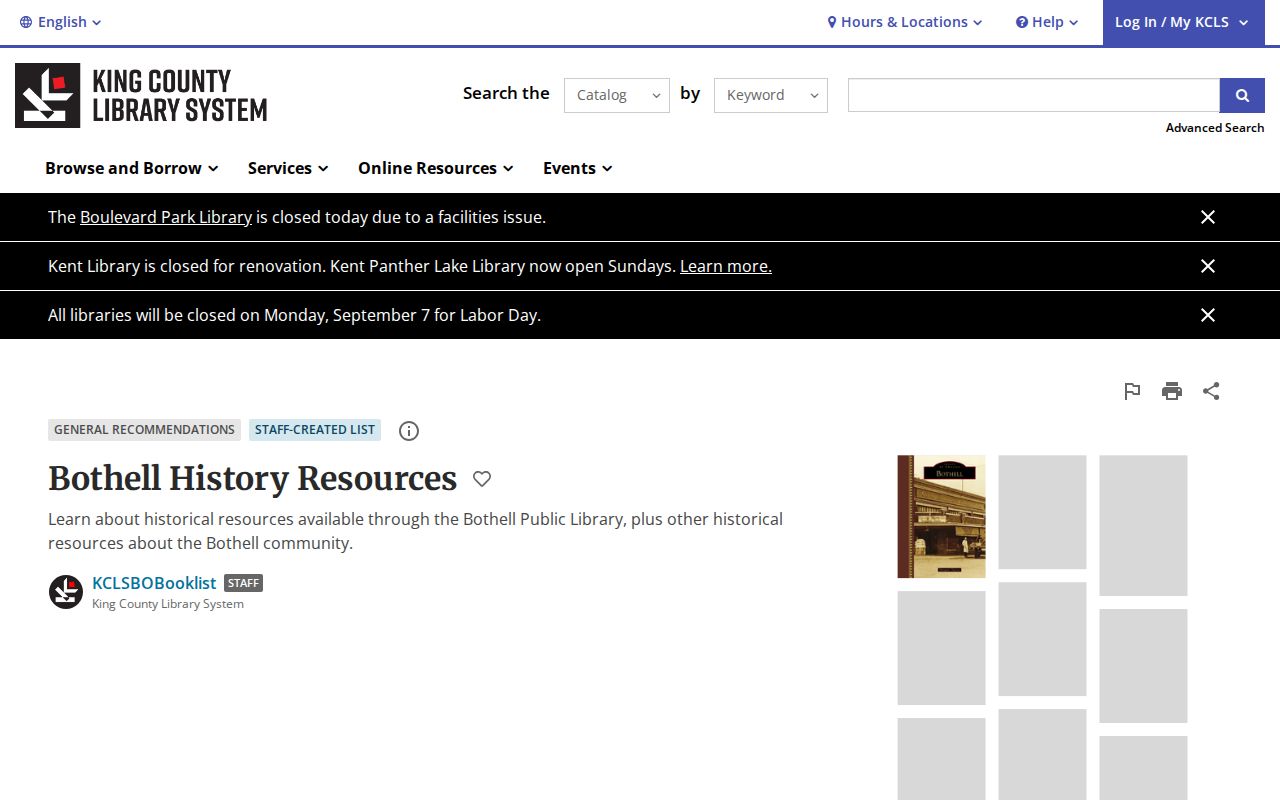
The image reinforces the need to search beyond one catalog label. Save an article date, page, publication title, and exact spelling, then return to the closest available directory year.
Read a Bothell Directory Entry
The research sample is a regional 1890 directory format, so it should be used as a reading proxy rather than proof of a Bothell-only issue. Entries can compress several facts into one line. Always copy the punctuation and consult the volume's own key before expanding a mark.
| Name | Usually the listed person or household head, sometimes with initials |
|---|---|
| Spouse or widow note | A spouse may appear in parentheses; “wid” may identify a deceased spouse |
| Work line | An occupation, trade, or business can distinguish same-name residents |
| Address | A residence or business address, using the volume's street form |
| Status mark | Some publishers mark owner, renter, roomer, or boarder status |
- Criss-cross directory
- A street-and-house-number arrangement used to reverse an address into a listed name.
- Householder index
- A list centered on household heads, which may omit other people at the same home.
- Abbreviation key
- The publisher's legend for short forms. Photograph or transcribe it before interpreting entries.
A city directory entry is not a census return. It may omit children, unlisted adults, and people missed by the canvass. Treat it as dated evidence and seek a second source.
Cross-Check Bothell Directory Sections
Use both halves of a later directory. The alphabetical section answers “where was this named person listed?” The reverse section answers “who was listed at this house number?” A match in both places helps catch a misspelled surname or a line copied from the wrong address.
Start at the address when tracing a building. Start at the surname when tracing a family. Then reverse the route. If the house number disappears between years, compare Sanborn maps, city landmarks, deeds, and the county legal description before assuming the family moved.
For a modern address-keyed owner trail, switch to the Bothell street directory process. It owns the assessor, GIS, and deed-index method, while historical volumes remain the focus here.
Map Bothell Directory Addresses
KCLS identifies downtown Bothell Sanborn fire-insurance sheets for 1912, 1926, and 1932. These maps show building footprints, materials, use, street labels, and block form. They do not name occupants. Pair a directory address with the closest map year to test whether the structure existed and how the lot changed.
This is a useful local quirk. A map can show that a building moved or a block was rebuilt, while the directory can show a listed person. The Hannan House, moved from Main Street to Bothell Landing in 1978, shows why a building's physical history and a parcel's legal chain must be kept separate.
Note: Cite the Sanborn sheet and year separately from the city directory volume, because each source proves a different fact.
Bothell Museum Papers and Deeds
The Bothell Historical Museum Society collection includes assembled deeds, bills of sale, and title abstracts from 1872 through 1921 for David and Albert Bothell. It also preserves business, church, personal, photographic, and legal materials. This unusual collection ties the city's name directly to early land paperwork.
View the museum collection page represented by this image before contacting staff.
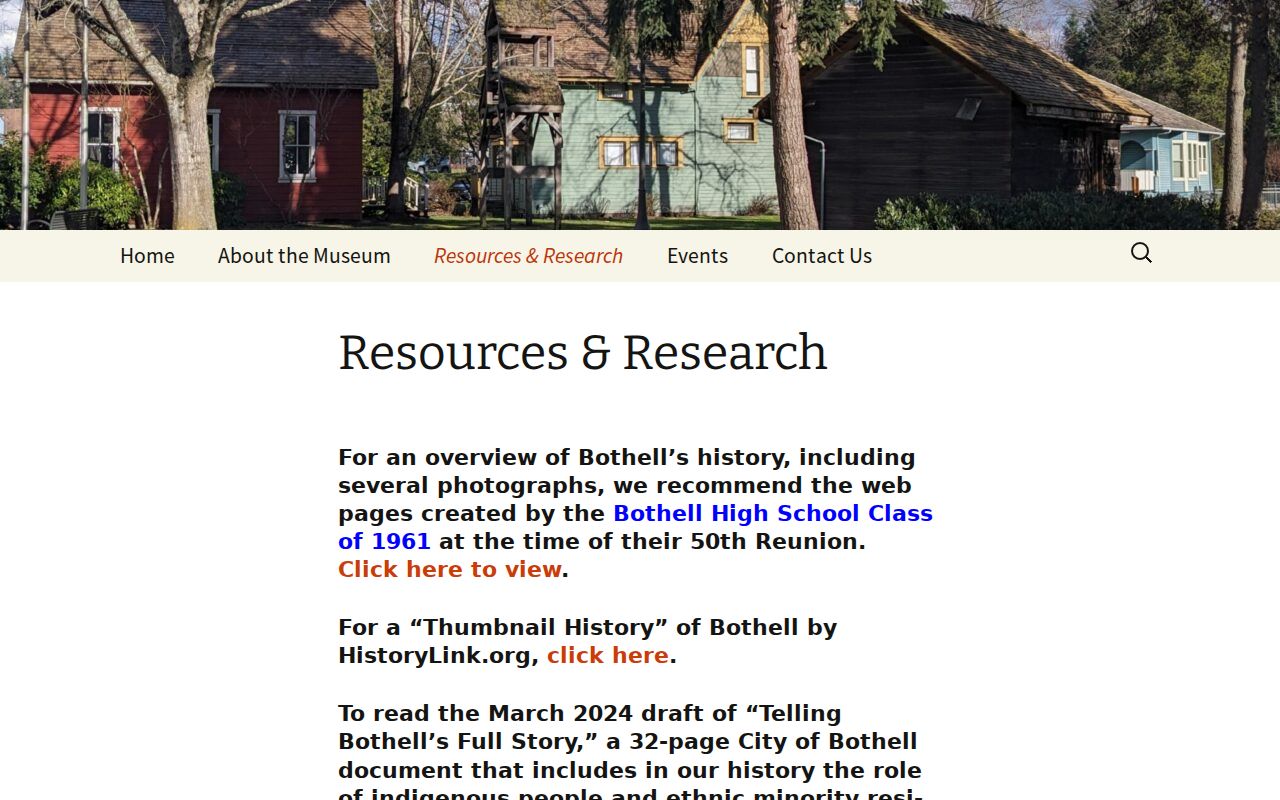
The captured page is a gateway, not a complete digital index. Give staff a person, business, street, and date span. Ask for collection titles, folders, access terms, and reproduction rules rather than assuming the original paper is online.
Extend Bothell City Directory Research
Washington State Archives and Puget Sound Regional Archives preserve records that can extend a directory trail. Historic tax assessment cards, house photographs, probate indexes, and county series may explain ownership or family changes between printed issues. King County historical probate files and indexes have separate date spans and custodians, so consult the relevant finding aid.
Open Washington Digital Archives search shown in this capture and search names with place and record-type filters.
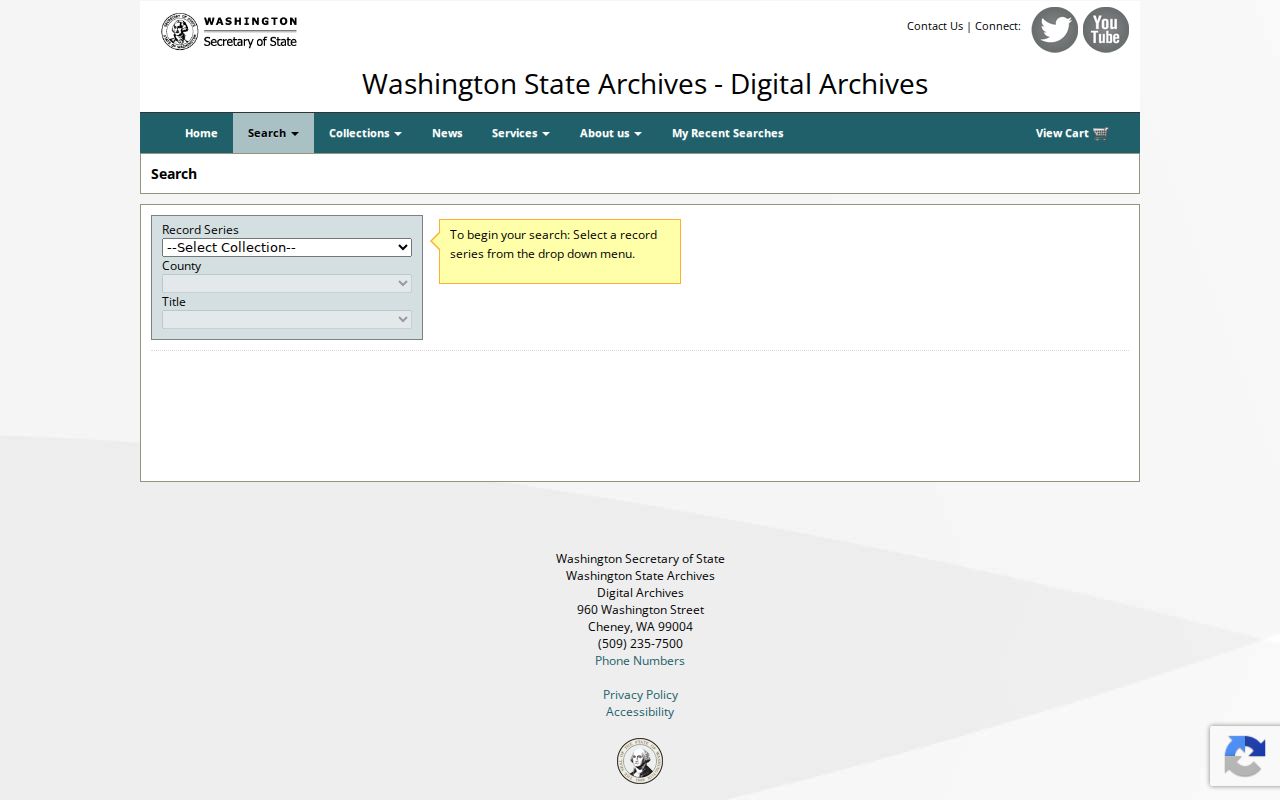
The archive screen offers broad statewide discovery. Confirm the record's county, collection, and custodian before treating a result as the same Bothell resident. The State Library closed to routine public access in July 2025 and now advertises limited Thursday appointments, which makes KCLS a stronger first local stop.
Trace Family in Bothell Directories
City directories fill the years between federal census schedules. A directory gives a yearly or periodic address snapshot; a census can add age, birthplace, relationship, and household context. Search both, then use newspapers, probate, cemetery records, and deeds to explain changes.
- Find the earliest likely surname entry and copy the full line, title page, year, and page.
- Move forward one available volume at a time. Track address, work, spouse notation, and spelling.
- Check the street section to verify the house number and see other listed households nearby.
- Pair the closest city directory years with the matching federal census schedule.
- Use the Citizen archive, probate files, deeds, cemetery records, or museum papers to explain an arrival or disappearance.
A person who vanishes may have moved, died, remarried, changed a listing, or simply been omitted. Do not choose one explanation without support. A death notice, deed, later census entry, or new directory listing can resolve the gap.
Preserve negative findings too. State which title and year were checked and whether the name, street, and variant spellings were searched. That record keeps honest gaps from becoming invented history.